Description
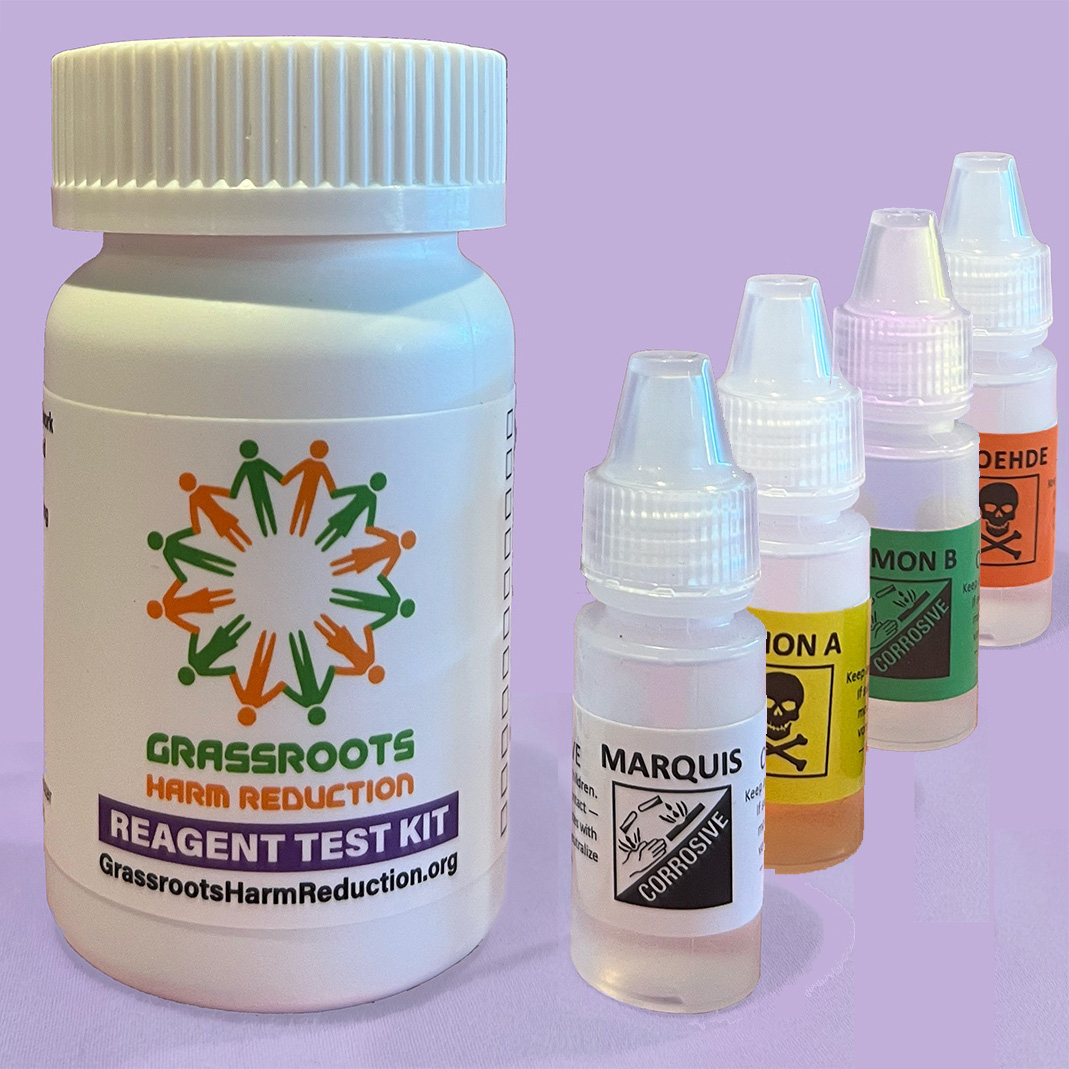
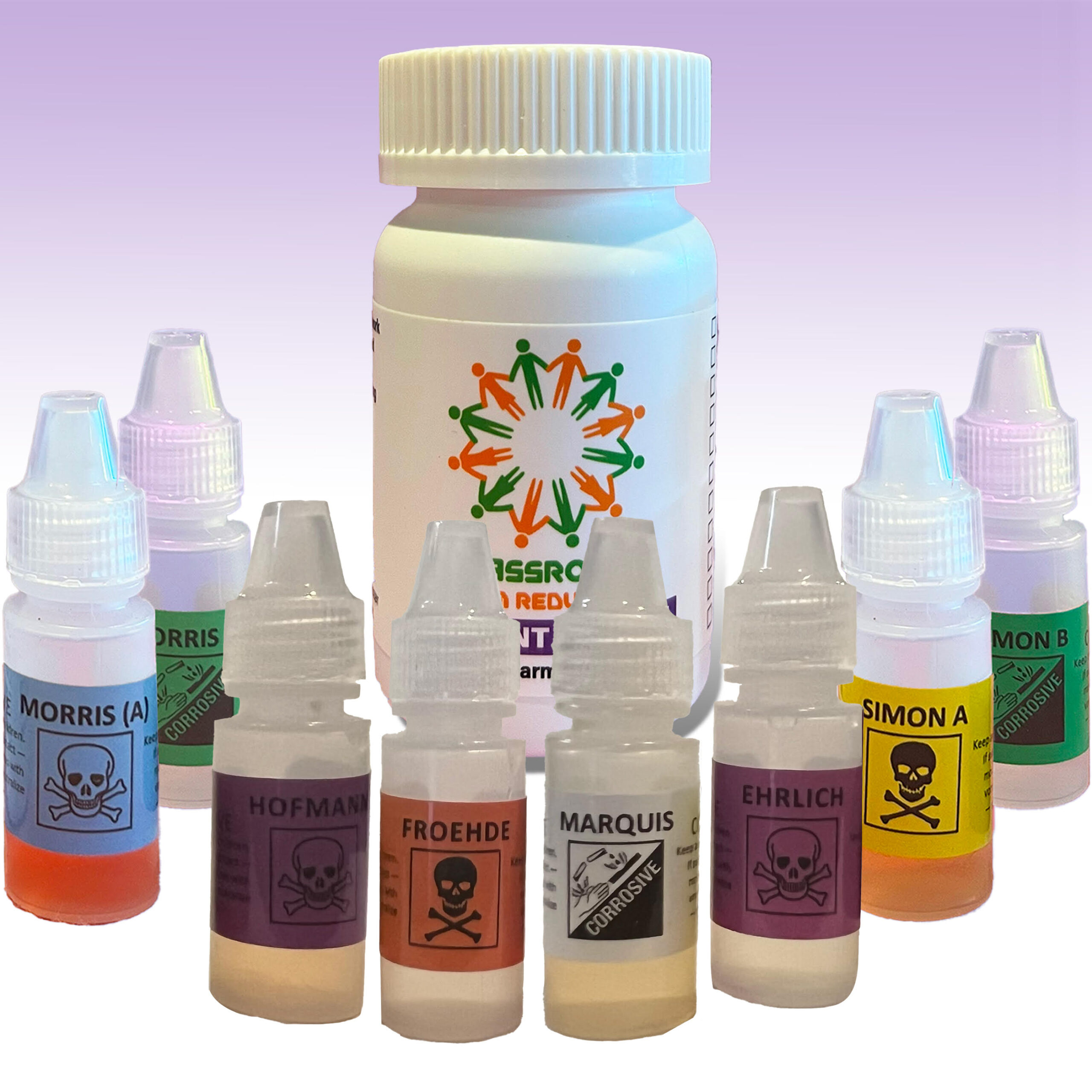
Reagent Test Kit Instructions
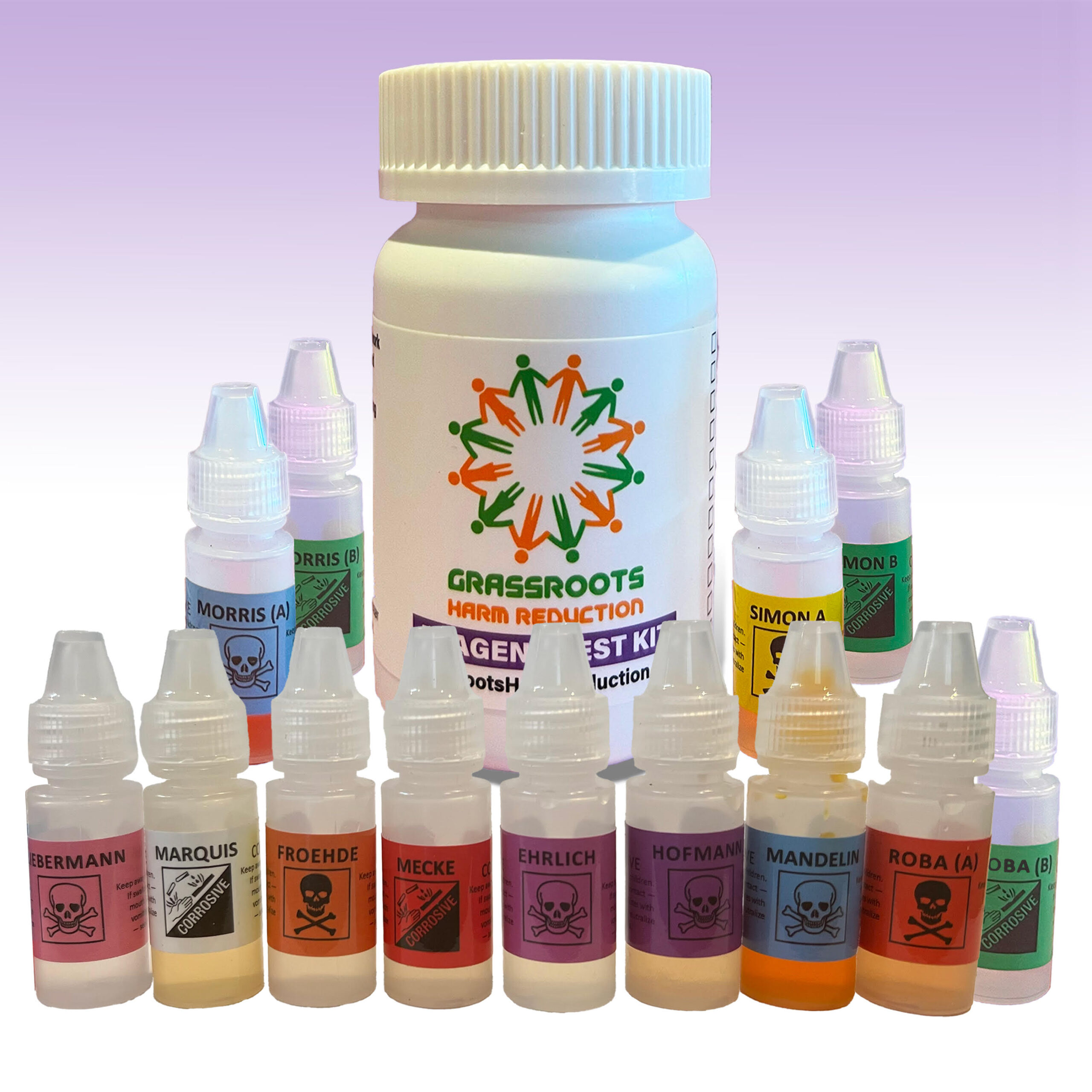
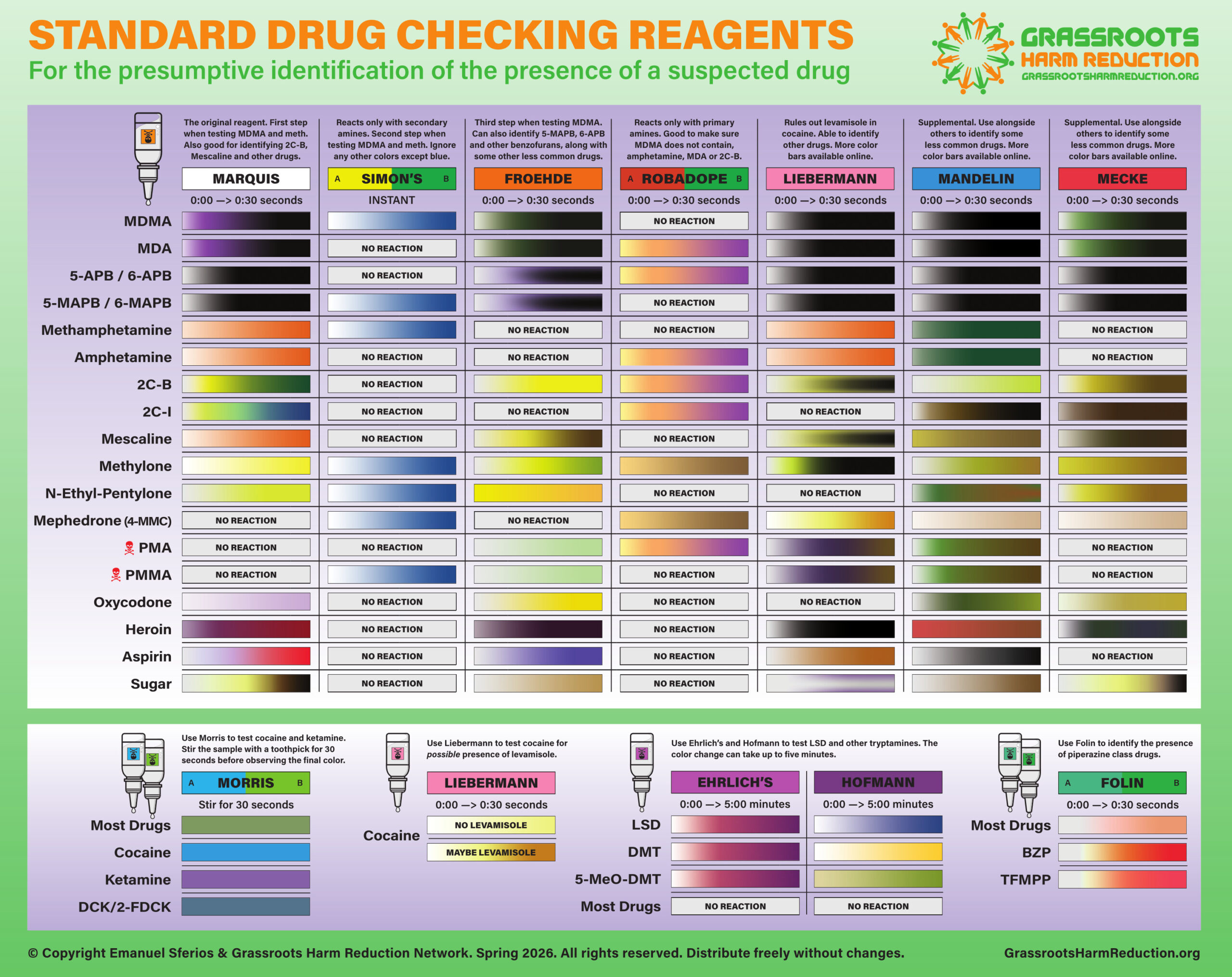
Put a tiny bit of your substance on a white ceramic plate. Place one drop of reagent on the sample. (Some reagents require a drop from two separate bottles.) Compare the color change to the color bars in the chart below. Most color changes happen fast. Some can take up to five minutes. Colors and times are approximate. Multiple factors can cause slight variations. Remember, reagents cannot detect purity, only presence. Store them in a refrigerator. Wash the plate thoroughly when done.
How to Test MDMA
- Crush a little bit of your suspected MDMA tablet or crystals into a fine powder. Put three tiny specks of the powder on a white ceramic plate at least an inch apart.
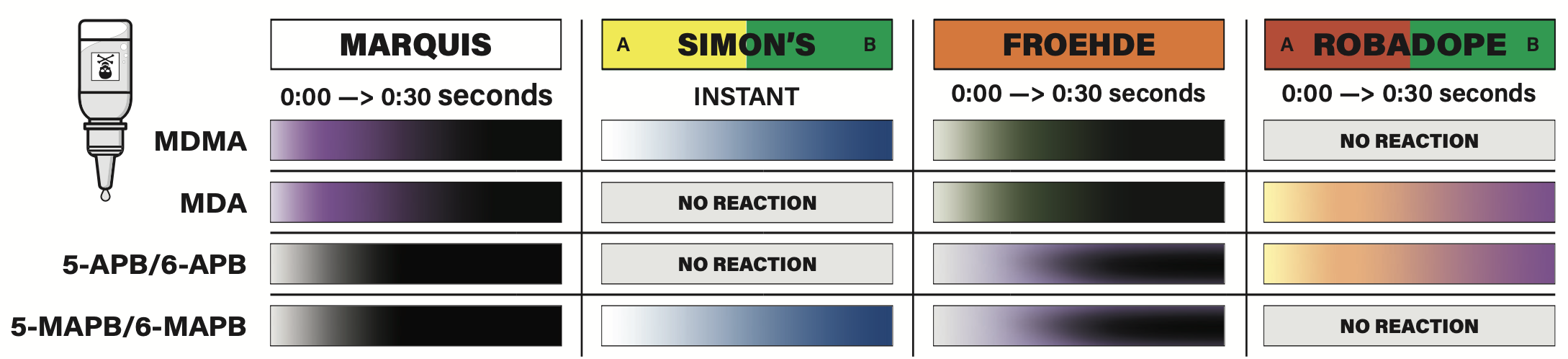
- First use Marquis reagent. The sample should immediately turn black. You might see a flash of purple at first. If so, continue to the next step.
- Next use Simon’s reagent. If Simon’s turns blue instantly, you likely have MDMA. If it doesn’t change color (or if it turns a dull gray color), you likely have MDA. But there’s one more step to be sure.
- Finally use Froehde reagent. Froehde rules out the benzofurans. With MDMA and MDA, Froehde will turn green to black. If it turns black with a purple hue instead, the result may indicate one of the benzofurans (APBs or MAPBs).
- Optional Robadope reagent. If your result is positive for MDMA, you can do a fourth test with Robadope to see if MDA or another primary amine is also present.

How to Test Cocaine & Ketamine
- Place a pinhead-sized amount of your suspected cocaine or ketamine onto a white ceramic plate, or one of our reagent testing plates. Use a bit more than a tiny speck.
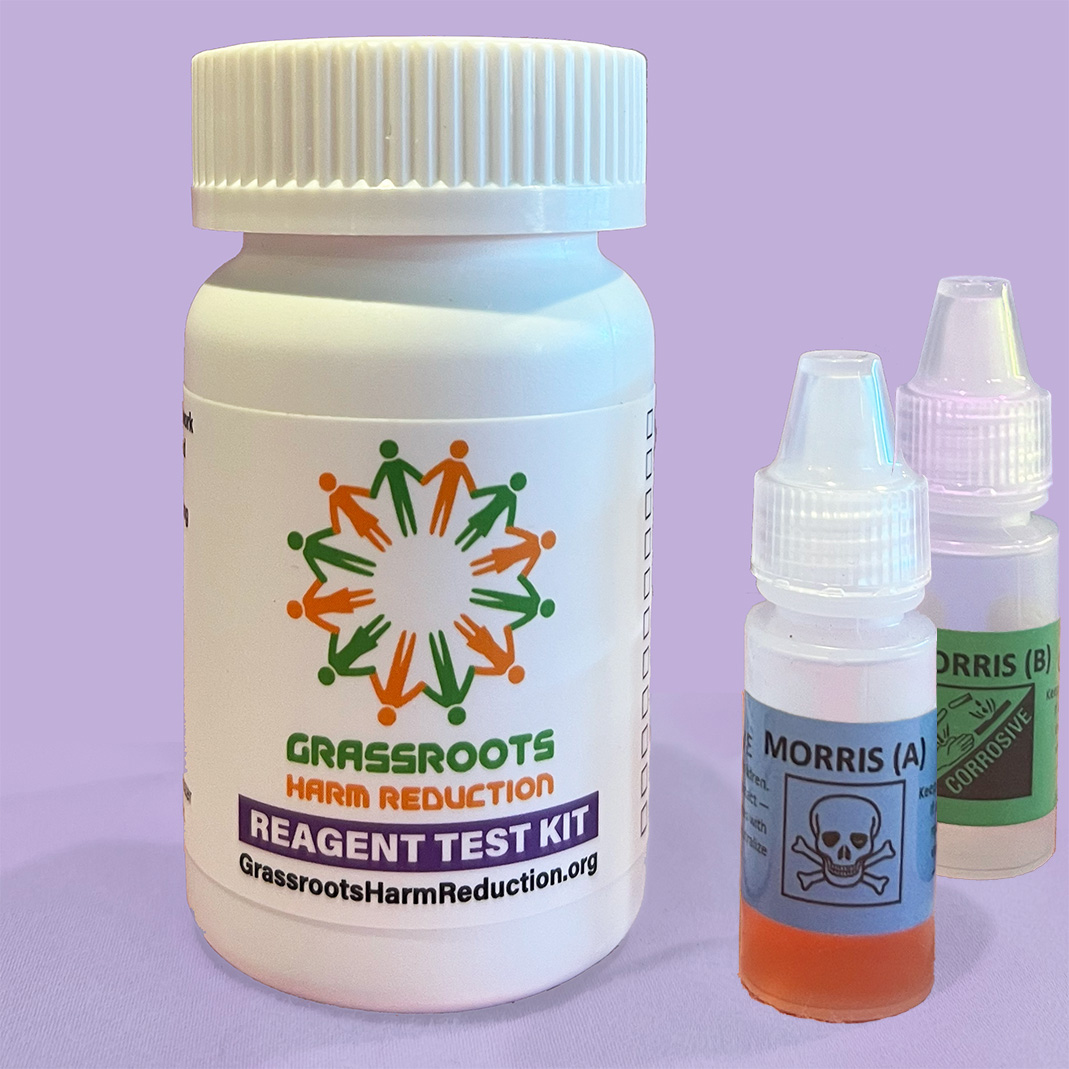
- Use Morris reagent. Place one drop from each bottle (A then B) onto the sample. Most substances will turn a bluish color after the first drop. That doesn’t mean anything yet.
- Stir the mixture with a toothpick or the sharp point of a knife for a full 30 seconds to achieve the final color reaction.
- Use Liebermann reagent to test cocaine for the possible presence of levamisole. No need to use Liebermann on ketamine.
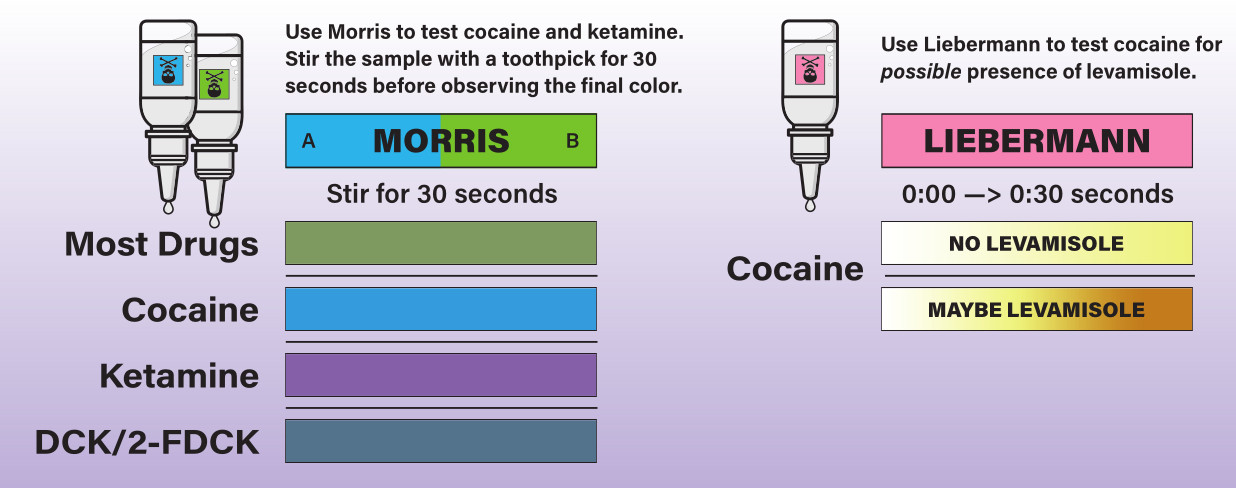

Morris reagent is the primary reagent used to identify the presence of ketamine or cocaine. There are currently no known drugs that turn purple with Morris other than ketamine, and nothing else besides cocaine turns that vibrant “blue raspberry candy” color.
Liebermann reagent can be used with cocaine to rule out the presence of levamisole. Levamisole is a veterinary deworming medication that is sometimes cut into cocaine. Consuming too much levamisole can harm your immune system. If Liebermann turns light yellow with cocaine, it definitely does not contain levamisole. If it turns orange, it might contain levamisole, but cocaine sometimes turns orange even without levamisole.
How to Test LSD, DMT & 5-MeO-DMT
- Cut off two tiny corners of your blotter or gel tab and place them on a white ceramic plate (or put two drops of your suspected LSD liquid on the plate). For suspected DMT or 5-MeO-DMT, just use two tiny specks of powder. Keep the samples a few inches apart.
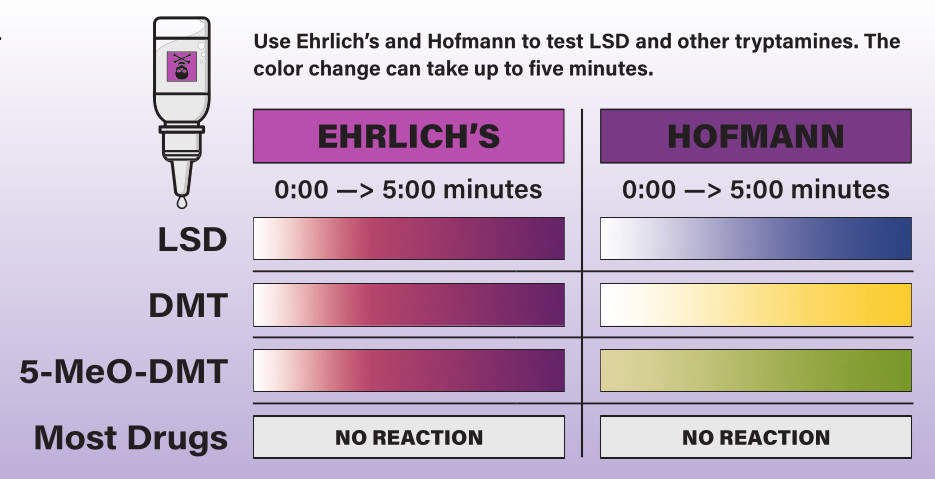
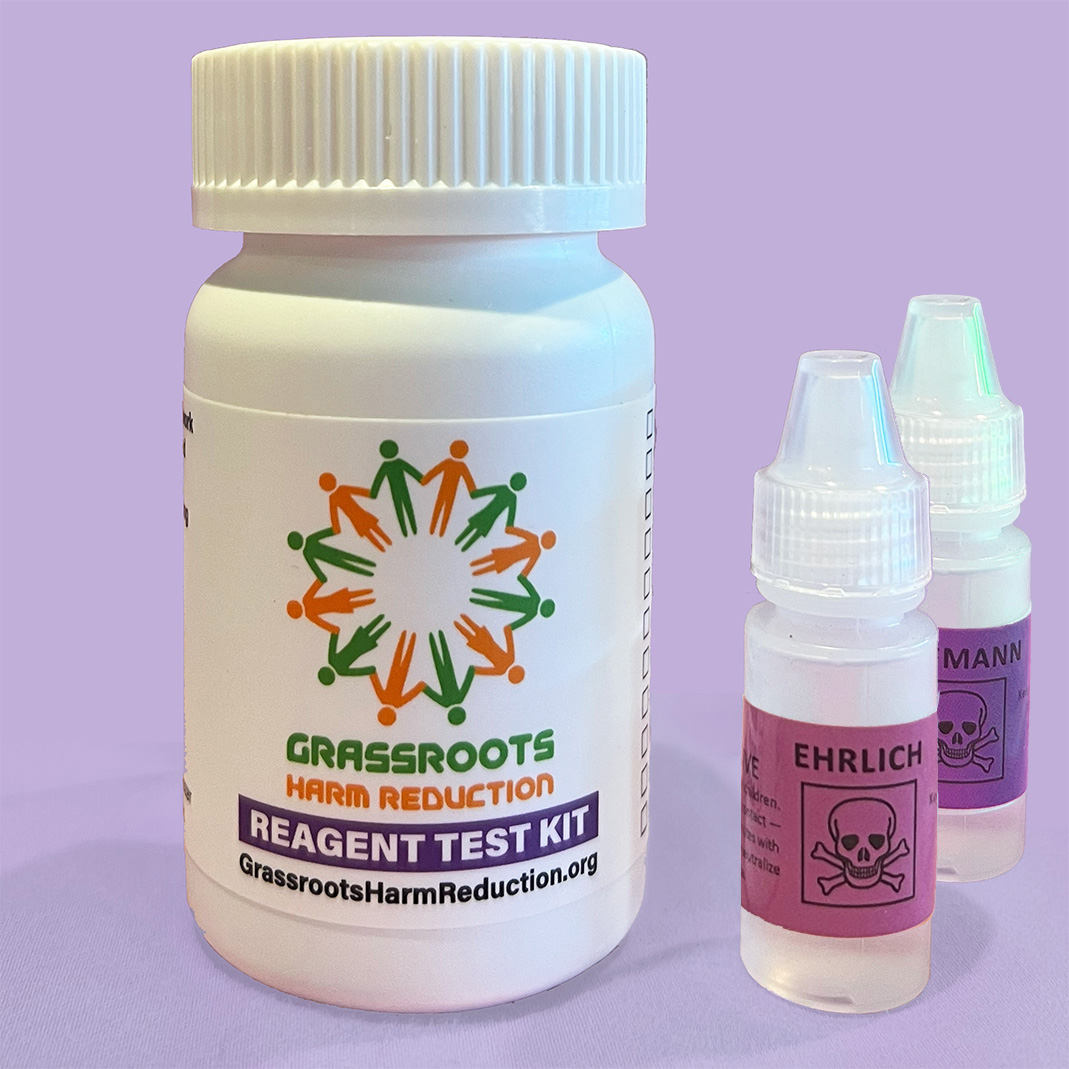
- First use Ehrlich’s reagent. Put one drop on one of the samples. Since LSD, DMT and 5-MeO-DMT are all indoles, the sample should turn purple. If not, you can stop here. You do not have an indole. (Note with blotter or gel tabs it can take up to five minutes for the purple color to appear.)
- Next use Hofmann reagent. Put one drop on the other sample. Assuming the previous test with Ehrlich’s turned purple, then LSD will turn blue, DMT will turn yellow, and 5-MeO-DMT will turn green. If it turns a different color (or no color at all) then you have a different type of indole.
- Use Liebermann reagent to test cocaine for the possible presence of levamisole. No need to use Liebermann on ketamine.
Reviews
There are no reviews yet.